
KARYA MANDIRI VALVE
Quality Valve Solutions for a Better Tomorrow
Floating, Trunnion Mounted, Full & Reduced Port
Ball Valve adalah jenis katup yang menggunakan bola berlubang (ball) sebagai elemen pengontrol aliran. Dengan memutar tuas (handle) 90 derajat, ball dapat memutar sehingga lubangnya sejajar dengan arah aliran (posisi terbuka) atau tegak lurus (posisi tertutup). Ball Valve sangat populer karena memberikan penutupan yang rapat (zero leakage) dan operasi yang cepat.
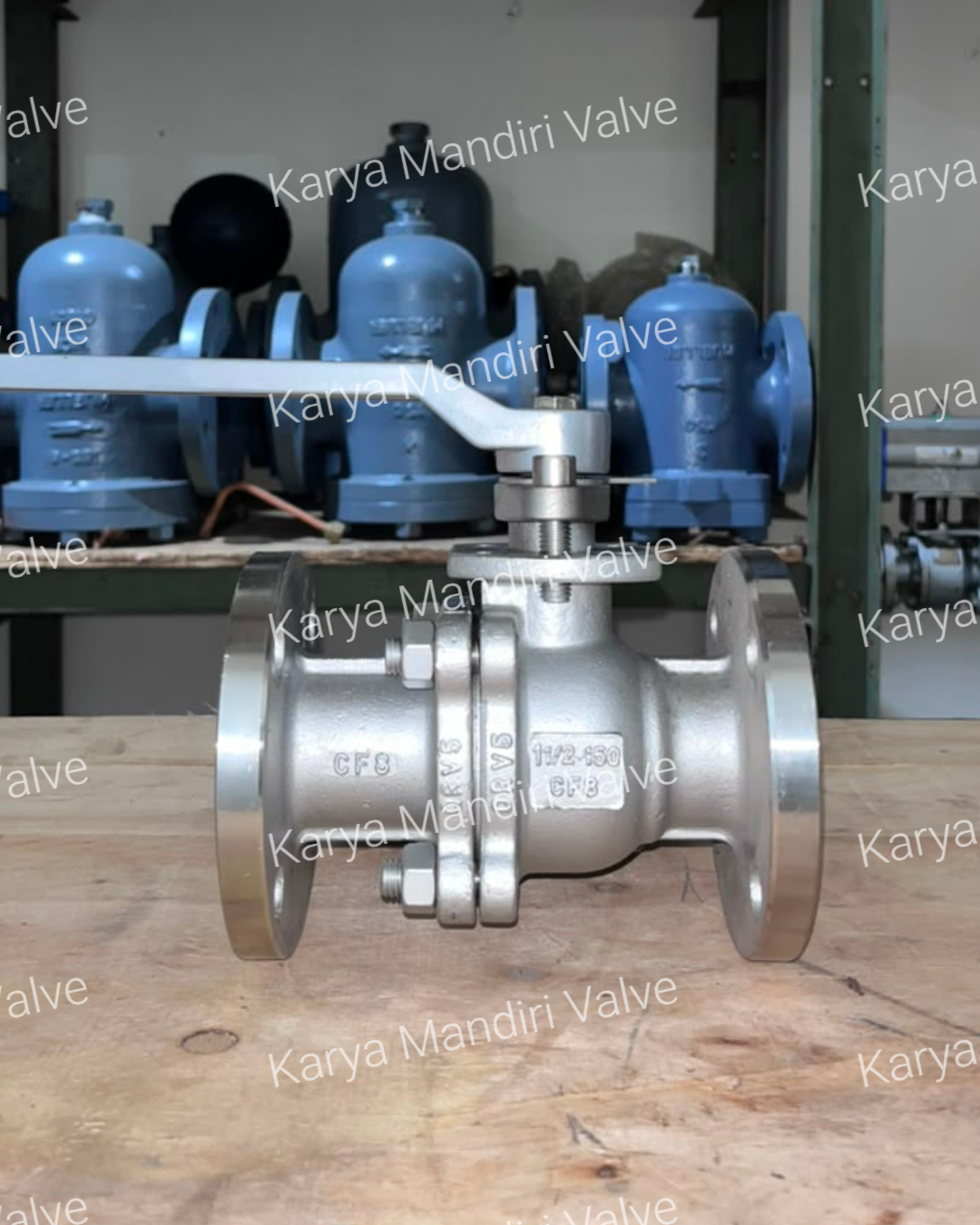
Ball Valve beroperasi dengan memutar bola berporos di dalam valve. Ketika poros bola sejajar dengan arah aliran, valve terbuka penuh. Ketika diputar 90 derajat, poros bola tegak lurus dengan aliran sehingga valve tertutup rapat. Mekanisme ini memungkinkan operasi pembukaan dan penutupan yang sangat cepat (hanya perlu putaran 1/4 putaran).
Karya Mandiri Valve menyediakan berbagai tipe Ball Valve, mulai dari Floating Ball Valve untuk tekanan rendah hingga menengah, hingga Trunnion Mounted Ball Valve untuk tekanan tinggi dan ukuran besar. Tersedia juga tipe V-Port untuk aplikasi kontrol (modulating) dan Metal Seated untuk fluida abrasif atau suhu tinggi.
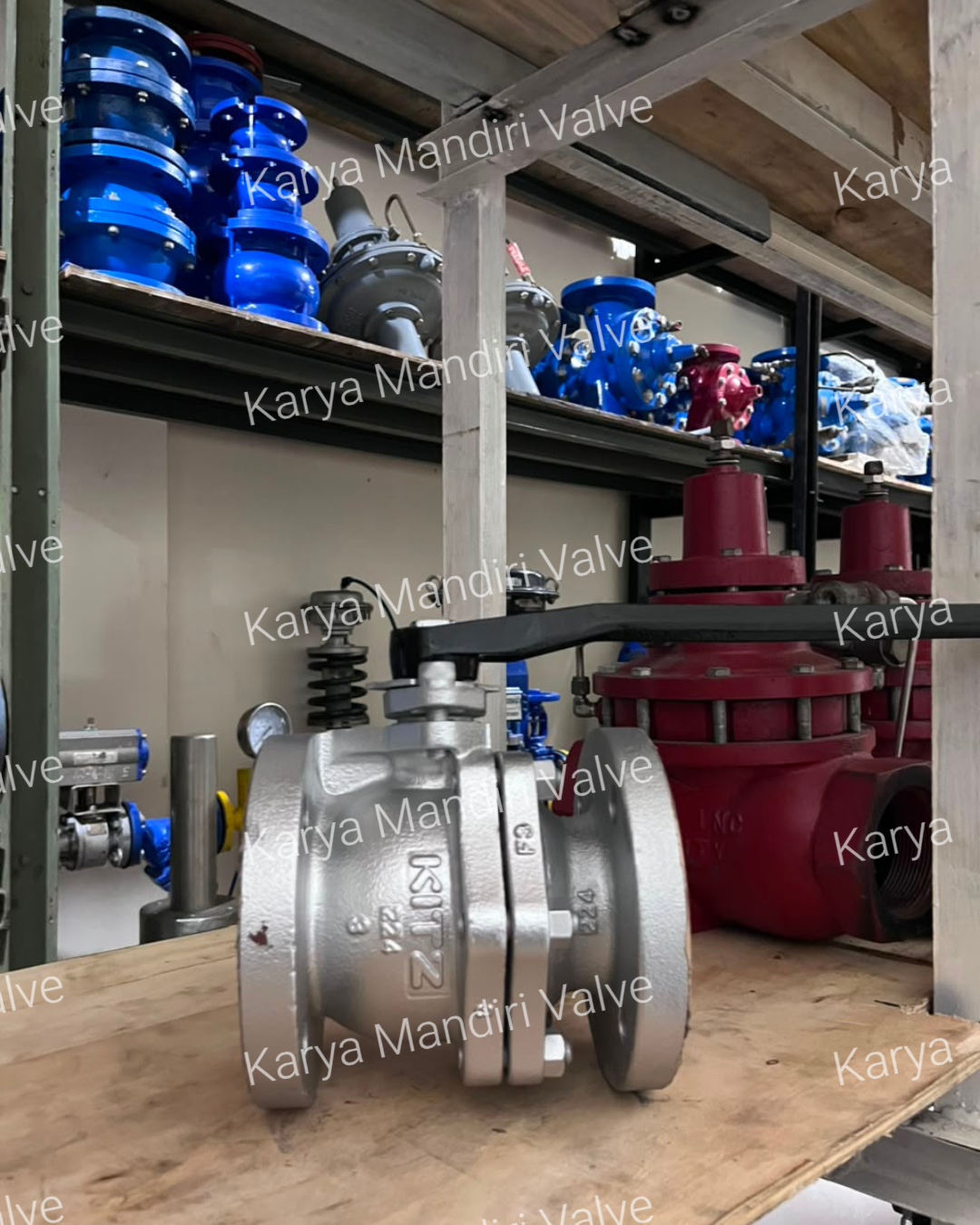
Bola tidak terkunci pada porosnya (floating), sehingga tekanan fluida akan mendorong bola menempel ke seat di sisi outlet. Cocok untuk ukuran kecil hingga menengah dan tekanan rendah hingga menengah.
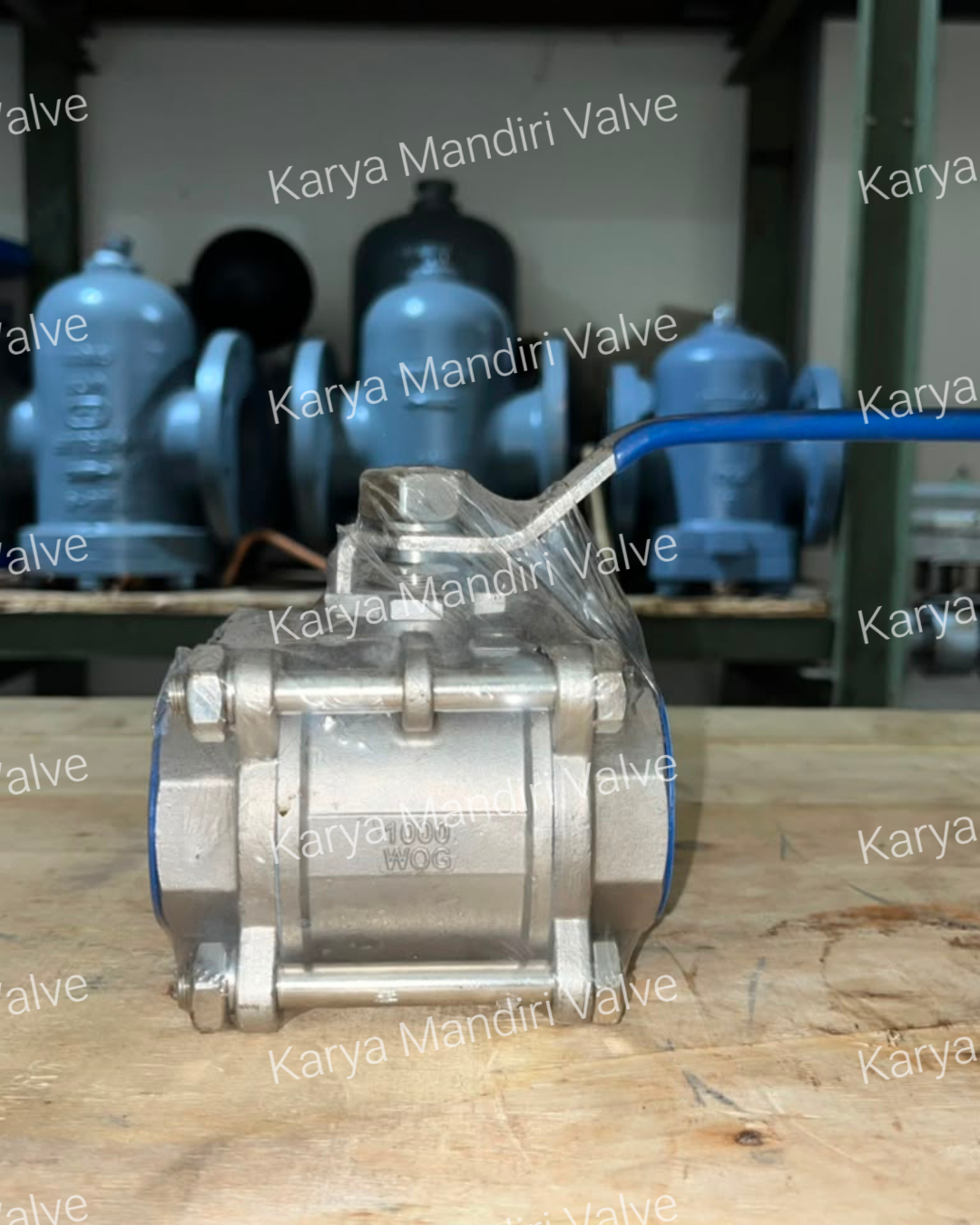
Memiliki 3 port (inlet/outlet). Bisa digunakan untuk membagi aliran (Diverter) atau mencampur aliran (Mixing). Tersedia konfigurasi L-Port dan T-Port.
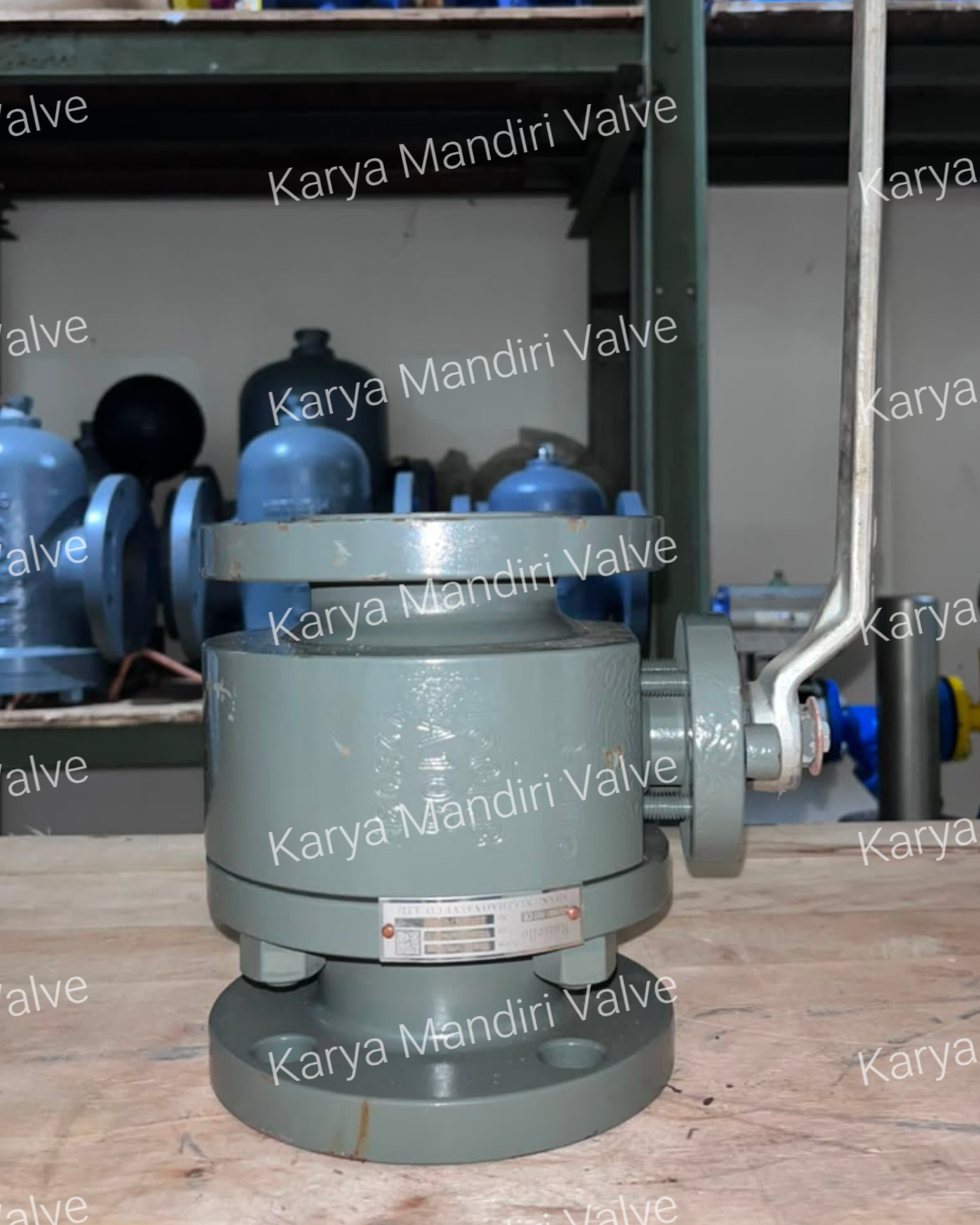
Konstruksi body dilas penuh (fully welded) tanpa baut. Mencegah kebocoran eksternal, sangat cocok untuk jalur pipa bawah tanah (underground pipeline) dan gas transmisi.
| Specification | Detail |
|---|---|
| Type | Floating, NPT (L/T-Port), Fully Welded |
| Inlet Size | ½" s/d 36" (DN15 s/d DN900) |
| Pressure Class | ASME 150# – 2500#, PN 10 – PN 400 |
| Body Material | Carbon Steel (WCB/A105), Stainless Steel (CF8/CF8M), Cast Iron, Ductile Iron, Forged Brass |
| Ball & Stem Material | SS304, SS316, Duplex (SS2205), Hastelloy, 17-4PH (Hardened) |
| Seat Material | PTFE, RPTFE (Reinforced), PEEK, Nylon, Delrin, Metal Seated (Tungsten Carbide) |
| Operation Type | Lever Handle, Gear Operator, Pneumatic Actuator, Electric Actuator, Hydraulic Actuator |
| Connection | Flanged (RF/RTJ), Threaded (NPT/BSP), Butt Weld, Socket Weld, Hub End |
| Standard & Code | API 6D, ASME B16.34, API 598, BS 5351, ISO 17292 |
| Certificate | Material Test Certificate (EN 10204 3.1), Fire-Safe (API 607 / API 6FA), CE Marking, ATEX |
Contact our sales team. Send your specifications (Size, Pressure Class, Material, Fluid) and we will provide the best offer within 24 hours.
Pilih admin sales kami untuk terhubung: